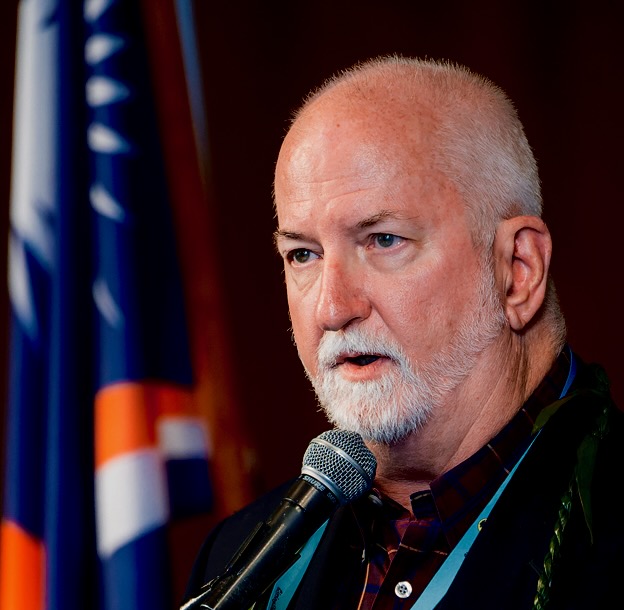
Stanford MD, 25-yr Navy veteran & DARPA Investigator of the Year. CEO of Infinitum Humanitarian Systems, leading operations in Ukraine, Yemen & the Yucatan. Principal Scientist for two ONR Climate labs worldwide.
Eric Rasmussen, MD, MDM, FACP is a distinguished internal medicine physician, humanitarian medicine pioneer, and CEO of Infinitum Humanitarian Systems in Seattle, Washington. He holds both undergraduate and medical degrees from Stanford University and a European Master's degree in disaster medicine from CEMEC, the UN World Health Organization's affiliate Centre European pour la Médecins des Catastrophes in Italy. Dr. Rasmussen served 25 years in the US Navy aboard nuclear submarines, amphibious ships, and aircraft carriers, with wartime deployments to Bosnia three times, Afghanistan twice, and Iraq in 2003. During his military career, he was appointed a Principal Investigator by DARPA, the Defense Advanced Research Projects Agency, and was honored as DARPA's Principal Investigator of the Year in 2003. Following his retirement from the Navy, he was appointed Founding CEO of the TED Prize organization awarded to Dr. Larry Brilliant, then Executive Director of Google.org, and continues to serve as Chair of that Board. Today, Dr. Rasmussen leads active humanitarian and scientific operations in Ukraine, Yemen, and the Yucatan rainforest, while serving as Principal Scientist for two US Office of Naval Research Climate Adaptation laboratories — one on Kwajalein Atoll in the Marshall Islands and another at the Cape Horn Sub-Antarctic Research Center in Puerto Williams, Chile, the southernmost permanent human settlement on earth.
Sessions
Improving Human Security in the Anthropocene: Exponential Business Opportunities at the Bottom of the Pyramid