In this session participants will learn how we will move around in the future, and, perhaps more important, why we will do so.
The mobility industry is in full disruption with loads of new technologies filling the headlines. The car has evolved from a mechanical device into a "data producing embedded software platform", and the internet is quickly linking the supply and demand to effectively fulfil our transport needs. Self-driving vehicles, electrification, drones, hyperloops, sustainable aviation fuels, electric scooters: the entire hype cycle can be filled with new predicted breakthroughs.
Just like every industry that is confronted with disruption, the changes come faster than most traditional players can prepare for with an outcome that is harder to predict. Yet, with all unpredictability that comes along with disruption there are some fixed rules that one can prepare for when combining the potential of technology development with the predictable needs of people.
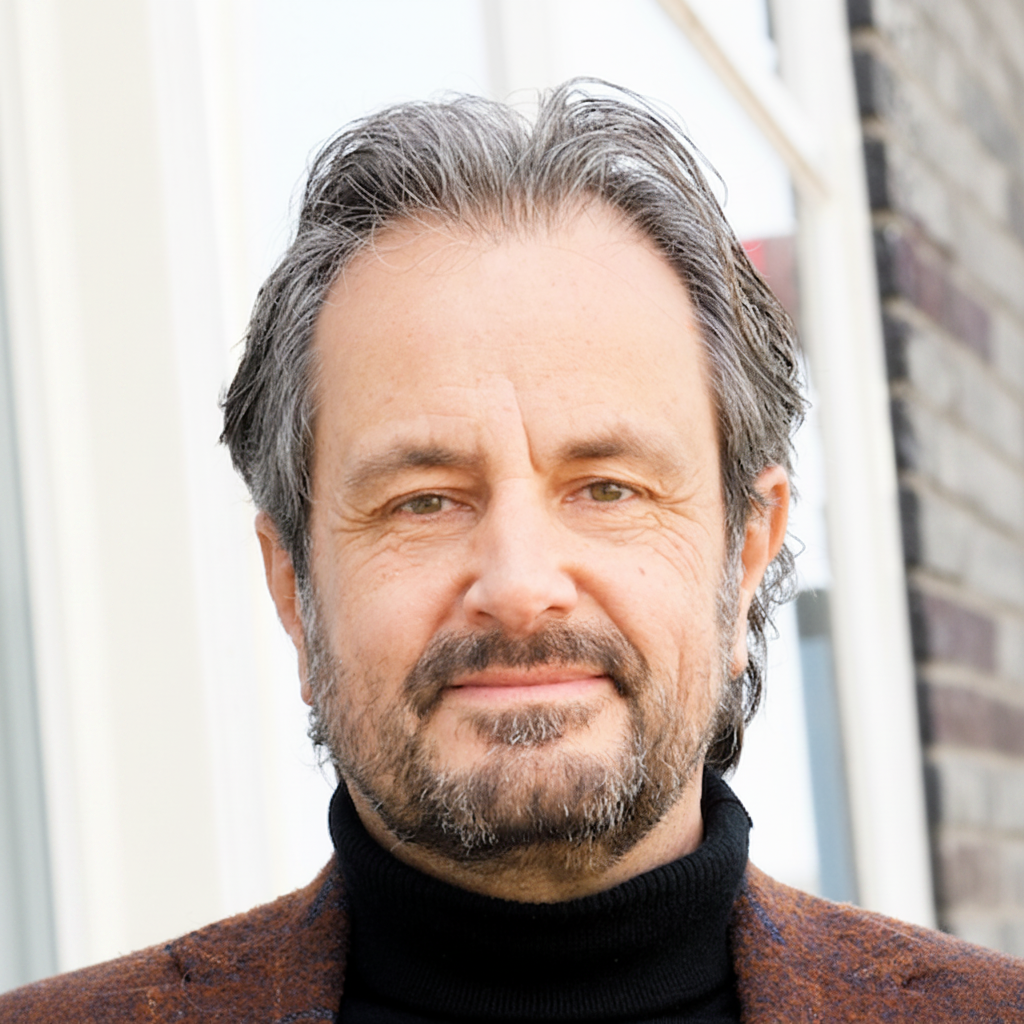
The expected rapid change in technology towards cheaper, safer, greener and far better vehicles and services will redefine a lot of traditional dogmas in the mobility area. Carlo van de Weijer will distinguish the sense from the nonsense on the mobility developments and picture how we travel and remain connected in the future. With some clear lessons for other industries.
Automation seems to be sweeping through companies relentlessly, canceling out obsolete jobs and creating new types of jobs. Some future predictions show "lights-out" factories where resources flow in on the one side and products come out on the other side, costing marginally more than the resources themselves. Will Artificial Intelligence create a similar wave of job replacement in the knowledge industry and, unlike earlier waves, create massive unemployment? Or will this fear again come untrue and will we again find new jobs that today haven't even been invented yet?
How can we prepare for that and how should we educate the future generation for such an indistinct future? In any case, technological development will also directly affect the way we lead organizations. In a volatile, uncertain, complex and ambiguous world, traditional control-and-command management appears to be replaced by more value- and purpose-driven leadership. With a high level of empowerment and self-steering where the factors that matter most are the hardest to measure.
For managerial professionals at every level of their career, this session will help to get insight in the different way that human resources will function in an organization where artificial intelligence resources are essential co-workers, and what leadership is required for such a new reality.
Rapidly advancing machine intelligence will be accompanied by significant societal changes. This will also have an impact on how professional organizations operate and how they should differentiate themselves in an increasingly competitive world. Carlo van de Weijer carries an broad experience in managing, coaching, and supervising a wide range of companies, from student teams to large corporations. He will share his vision on how AI will influence the organization of our work in the future and what that means for leadership, human resources, and on how corporate strategic processes can adapt.
Artificial Intelligence is no longer a distant promise but a practical tool reshaping industries. At its core, AI refers to systems that can perform tasks that traditionally require human intelligence – from recognizing patterns and interpreting language to making decisions and generating creative content. Recent advances, especially in generative AI, are delivering unprecedented productivity gains, automating routine cognitive work and augmenting complex decision-making.
As with past waves of automation, questions arise: will AI simply shift jobs into new areas we cannot yet imagine, or will it displace knowledge work on a scale that challenges current employment models? Either way, its influence on how organizations operate is certain.
In a world that is increasingly volatile, uncertain, complex, and ambiguous, AI demands a shift from traditional control-and-command management toward leadership that is value-driven, adaptive, and able to integrate human and AI capabilities. This session offers a clear introduction to AI, its potential, and the leadership mindset needed to thrive alongside intelligent systems.