The Singularity Monthly: AI Scientist

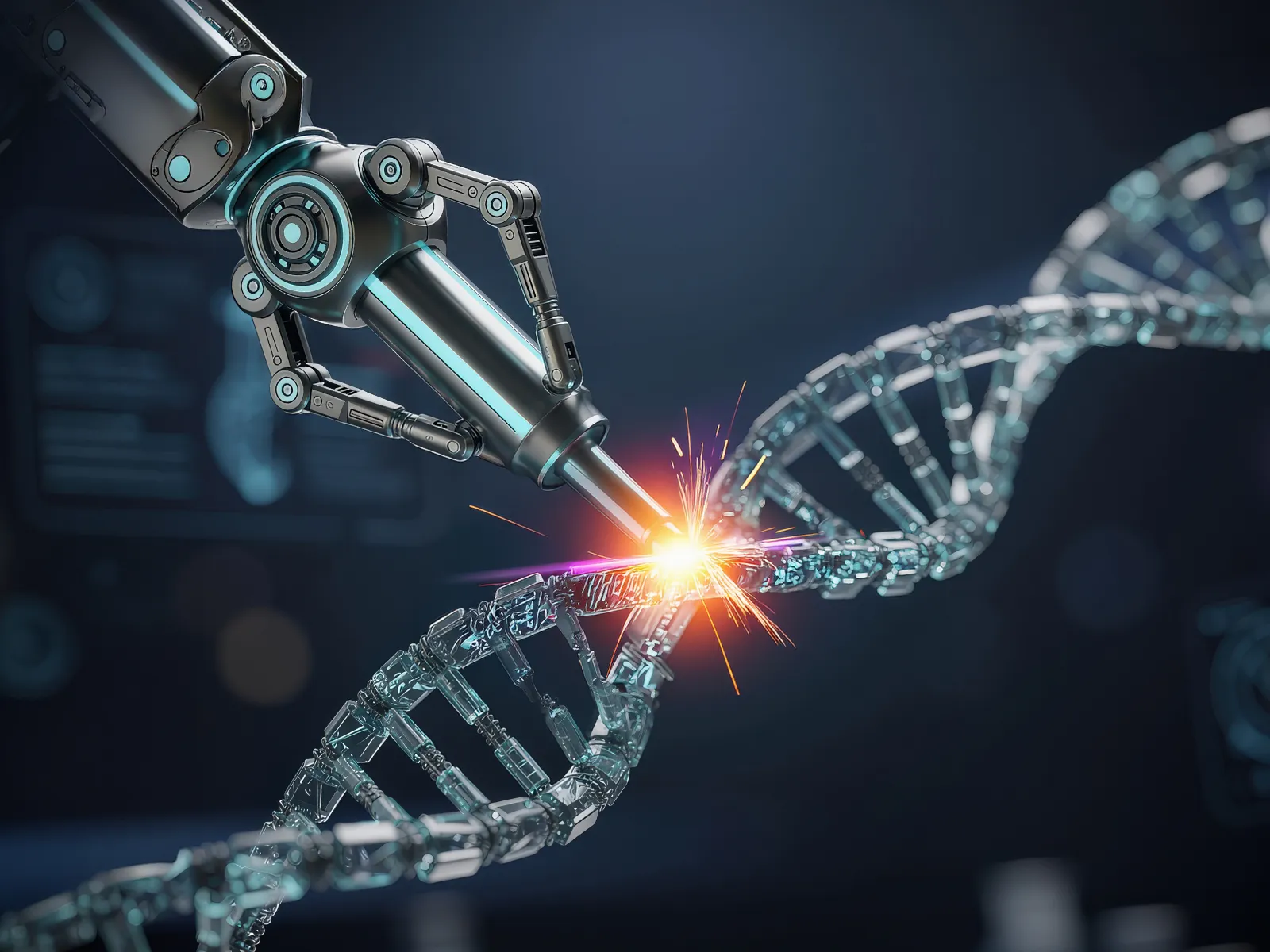
In 2020, a Google DeepMind AI called AlphaFold2 won a little-known protein-folding competition. Given the sequence of a protein’s molecules, AlphaFold could predict its shape. Previously, scientists would toil for years or decades to model proteins with meticulous lab work; AlphaFold could do the job in minutes or hours. The AI’s victory seemed to signal a looming revolution in biology, and maybe science at large.
AlphaFold had soon modeled over 200 million proteins, and two of its creators, Demis Hassabis and John Jumper, won a Nobel Prize for the work in 2024. Expectations for the algorithm, particularly in drug discovery, ran high. Proteins keep our bodies healthy, but when they go wrong, they can wreak havoc. Many medications target proteins for this reason. If you can model one, maybe you can design the perfect drug for it. DeepMind launched a startup, Isomorphic Labs, to pursue the idea in 2021.
But five years later AI-designed drugs have yet to flood the market. As is often the case, AlphaFold was only the opening line in a longer, more complicated story.
Biology is an excruciatingly complex molecular dance. When DeepMind released AlphaFold, scientists noted that proteins are not car parts; they’re more like squishy machines in motion. You need to know how each one morphs as it goes about its business. What’s more, proteins aren’t the only molecules in biology. We can’t forget DNA, RNA, and the vast array of other biomolecules. It’s not enough to take a static picture of just one of these players; you have to learn how they interact over time.
The field has since moved well beyond AlphaFold with a fraction of the accolades.
AlphaFold was soon joined by RoseTTAFold, another protein modeling algorithm from a team led by the University of Washington’s David Baker, who shared the Nobel Prize with Hassabis and Jumper. Later generations of both algorithms have begun to dynamically model proteins, small molecules, DNA, and RNA. Meanwhile, Baker and others are pushing the frontier with ChatGPT-like algorithms fluent in the language of biology. Some of these generate designer proteins never seen before in nature; others produce whole genomes shown to work in viruses. Still more are dreaming up antibodies entering clinical trials and new systems of CRISPR gene editing.
These algorithms support specific steps in the scientific process, but modeling and design still require physical work by human hands to validate them in the lab. Now researchers are stringing tools together into end-to-end systems for research.
Two systems, FutureHouse’s Robin and DeepMind’s Co-Scientist, aim to shoulder more of the early drug discovery process. “They read through existing literature, generate hypotheses, suggest relevant experiments, and analyze and interpret the data for scientists to evaluate,” Shelly Fan wrote for SingularityHub last month. Ginkgo Bioworks and OpenAI aim to extend this process into the lab with robotics. Earlier this year, the companies said they’d used GPT-5 to independently design and run thousands of biological experiments in a “robotics cloud laboratory.” The system reduced the cost of producing a desired protein by 40 percent.
“This is programmable biology: designing biological components on a computer and building them in the physical world, with AI closing the loop,” the University of Virginia’s Stephen D. Turner wrote for The Conversation in April.
In the most optimistic telling, AI in science—in this case biology but, in theory, any field—could accelerate and democratize humanity’s greatest engine for discovery and innovation. In medicine, it could stack the pipeline with drugs for a range of conditions and shorten lab testing and validation timelines. “So on average, it takes, you know, ten years and billions of dollars to design just one drug. We can maybe reduce that down from years to maybe months or maybe even weeks. Which sounds incredible today but that's also what people used to think about protein structures,” Demis Hassabis told 60 Minutes’ Scott Pelley last year. “It would revolutionize human health, and I think one day maybe we can cure all disease with the help of AI.”
This is a noble, if extremely ambitious, mission. It will also sound familiar. Are we any closer to realizing it now than we were in 2020 or 2015? The tools have clearly advanced and there are more of them. But it’d be an easier point to argue if a blockbuster, or even niche, AI-assisted drug had been approved faster than common wisdom would suggest possible. And even as more AI-designed drugs enter clinical trials, some hard limits kick in. No matter how fast you sprint out of the gates, trials take many years and dollars to recruit, run, and report. And even promising drugs fail.
Also, while AI excels at synthesizing existing knowledge—shown by OpenAI’s recent math discovery—it struggles to make conceptual leaps: The most valuable step in science is still handled by humans. Already the limits and downsides of these systems are becoming clearer. Academia is dealing with an influx of sloppy AI-assisted papers, and early claims of automated lab work have wilted somewhat under examination.
It’s worth weighing the risks too. With AI, non-experts can complete complex tasks without deep training or experience. Vibe coding is a good example. It’s early, but a similar democratizing trend is at work in biotechnology. You can already send digital sequences of nucleotides or amino acids to labs and have physical DNA or proteins delivered to your door. Safeguards are in place, and only a few people in the world know what to order and what to do with the material. But AI could begin providing this kind of expertise to more people. Poorly coded websites and AI-aided hackers are one thing; a vibe-coded virus would pose a far greater danger. Today’s safeguards are likely insufficient, and as the technology advances, we’ll need to tighten them.
But let’s say we mitigate more of the risk. If you dial back the hype, without wholly discounting the technology, you’re still left with some powerful tools in the hands of scientists. It appears AI is beginning to shave time off early-stage drug development. It may even be increasing the number of drugs that survive the first phases.
”Will AI overwrite the laws of nature and eliminate all human disease in 10 years? No. It won’t magically bypass the years of rigorous human safety testing required to put a pill in a patient’s hand,” Insilico CEO Alex Zhavoronkov recently wrote for Fast Company. “But what AI is doing is transforming biological discovery from a slow, bespoke artisan craft into a highly scalable, compute-driven engine. …We don’t need to achieve immortality by 2035 to recognize that as a total gamechanger.”

MORE NEWS | From the Future
Solar overtakes coal in the US electricity mix for the first time.
Monthly electricity supplied to the US grid by solar power moved ahead of coal for the first time in May, according to US EIA data analyzed by think tank Ember. Solar supplied 12.8 percent of US electricity compared to 12.2 percent from coal, making it the country’s third-largest source for the month, behind natural gas and nuclear power. Since 2021, coal’s share of the mix has fallen by almost half, while solar’s has more than doubled. Despite industry headwinds, solar and battery storage made up 91 percent of new capacity added in the first quarter. "Overtaking coal for the first month on record shows just how far solar has come—from a niche contributor to the third-largest and fastest-growing source of power in the US electricity system," Ember’s Nicolas Fulghum said in a press release.
SpaceX Falcon 9 rocket singlehandedly beats the competition.
It’s debatable how much SpaceX, which recently went public to a great deal of fanfare and skepticism, should actually be worth. But it’s harder to argue against the company’s core rocket technology. One of its reusable boosters, 1067, recently notched its 35th launch in five years. Ars Technica’s Eric Berger writes that, over the same period, competitor United Launch Alliance flew its Atlas V, Vulcan, and Delta IV Heavy rockets 29 times: “Put another way, [1067] has put more mass into orbit than more than two dozen expendable rockets over half a decade of effort."
AI gets physical: Humanoid robots defeat elite runners and table-tennis pros.
When China added humanoid robots to an annual half marathon last year, few finished. This year, it was a different story. Nearly half crossed the finish line, and the winning robot beat the human world record. Not long after, Sony AI's Ace robot arm took out elite table-tennis players. Both feats made for splashy headlines, but companies aren’t making robots to compete with athletes. More importantly, these kinds of real-world tests show the underlying hardware and software—the drivers of potential value in factories and elsewhere—continue to improve at a rapid clip.
EV battery charges in 6 minutes—nearing the time it’d take to gas up.
CATL, the world’s biggest EV battery-maker, claimed its latest fast-charging model goes from 10% to 98% in 6 minutes, 27 seconds. That’s only a few minutes longer than it’d take to refuel the average gas-powered car. “This effectively closes the gap with ICE [internal combustion engine] vehicles,” Bernstein analysts wrote, according to the Wall Street Journal. While fast-charging batteries often lose capacity quickly, CATL says its model does better in this regard. The battery isn’t on the road yet, so the numbers still need confirmation by third parties. It may also take time to find its way into cars outside China, prove to be expensive, and require specialized infrastructure (which would lengthen the timeline further). Still, the trend is real. EV batteries are getting cheaper, traveling farther, and charging faster every year.
CALENDAR | Upcoming Events
OCTOBER 25-29
Singularity Executive Program
Silicon Valley, California
Thanks for reading. We hope you enjoyed this month's updates and found something to inspire you on your exponential journey.
See you next month!
The Singularity Team