The Singularity Monthly: What Will AI Do to the Economy?

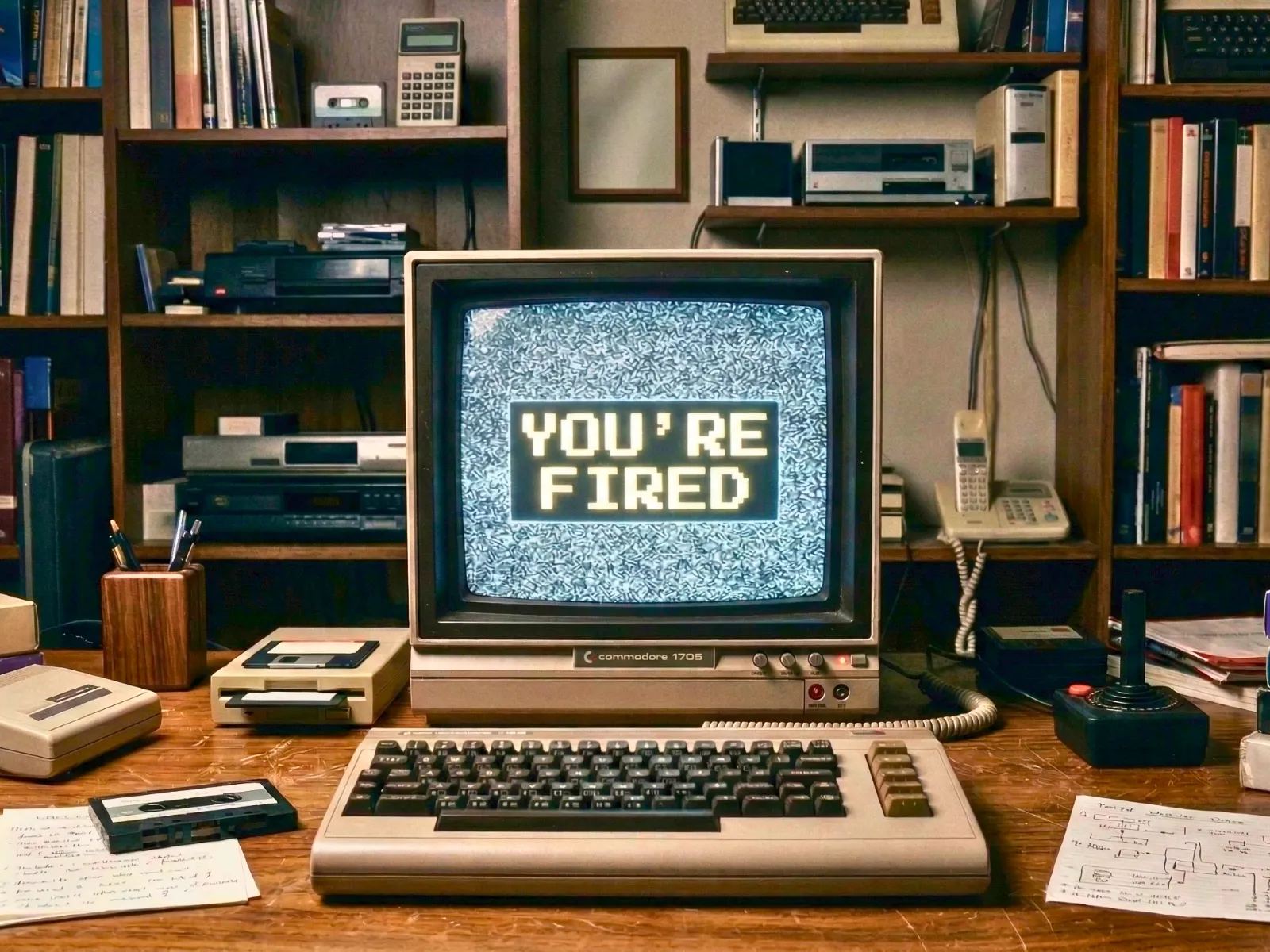
In February, fintech company Block announced it would lay off 40 percent of its workers. Cofounder and CEO Jack Dorsey said the move was motivated by gains in AI. “A significantly smaller team, using the tools we’re building, can do more and do it better. And intelligence tool capabilities are compounding faster every week,” Dorsey wrote in a letter to shareholders. “Within the next year, I believe the majority of companies will reach the same conclusion and make similar structural changes.”
Block’s announcement was only the latest, albeit most concrete, piece of news in a series of viral AI tales that whipsawed markets in recent weeks. The fear: AI agents will wipe out industries and take over white-collar work en masse—like, starting now.
Anthropic’s Claude Cowork, released in January, has been a leading character in the drama. Cowork is a less technical version of Anthropic’s hit tool Claude Code. Since late last fall, software engineers have lauded Claude Code as a step change in coding agents. Cowork extends those abilities to tasks beyond writing code.
AI companies said 2025 would be the year of agents, but 2026 looks more deserving of the title. Agents have been around for years, but they’ve improved noticeably in recent months. People can now ask AI to handle more complex tasks where an agent makes decisions and takes action, sometimes working in the background for minutes or even hours. Prominent tech leaders in AI argue that agents will rapidly automate swathes of white-collar work across industries. Stories of developers offloading work to Claude and non-technical workers vibe-coding apps have been spreading fast.
The other big AI players, including OpenAI and Google, are building their own agents too. But it was a few rollouts from Anthropic that roiled markets. After launching Cowork, the company updated the underlying Claude model, pushed out industry-specific plugins, and introduced Claude Code Security. These releases appeared to cause the stock prices of software-as-a-service (SaaS) companies—think, Salesforce—to swoon because, so the story went, businesses could use Claude to directly replace them or develop in-house software, tailored to their own organizations, that’s virtually indistinguishable from top-shelf products with a six-figure annual subscription.
Then came the blog posts. A viral essay by Matt Shumer, cofounder and CEO of OthersideAI, compared progress in AI agents to the early days of the pandemic. Many may have heard about agents but think they’re sequestered in the tech world. Well, Shumer writes, what you’ve heard is true. Agents are taking over coding, as he can attest as a developer, but they won’t stop there. They’re coming for your job too, and it’ll happen sooner than you think.
Another scenario—not a forecast, according to the authors—suggested agents could begin driving white-collar layoffs in 2026. As people struggle to find new jobs, some shift into lower paying work, depressing wages. Consumer spending falls, while mortgage and private credit struggles threaten the financial system. As agents eliminate market inefficiencies and middlemen, companies invest more in AI to further cut costs, and a negative feedback loop ensues. Economic output produced by algorithms that don’t eat, sleep, or otherwise participate in the economy comes to be known as “ghost GDP,” and it’s growing. By 2028, the S&P 500 is down 38 percent from 2026 highs, and unemployment hits 10.2 percent. The piece, published by research firm Citrini, is a thought experiment; still, the Dow Jones Industrial Average fell 1.7 percent, or over 800 points, on the day.
That generative AI tools are improving at a variety of tasks, coding in particular, is uncontroversial. But not everyone agrees about what it means for the economy. We may find out that training AI to write code is easier than automating other tasks. Code runs or it doesn’t, which provides a useful benchmark for AI training. If the end goal is clear, AI learns to improve its output more efficiently. Other jobs are not so binary.
Even as coding agents automate work, producing quality software still requires experienced developers to identify and correct mistakes and vulnerabilities introduced in the process. This is why agents can’t yet be unleashed unsupervised on sensitive tasks. In a recent cautionary tale, Meta AI alignment director, Summer Yue, was working with the agentic tool, OpenClaw, only to watch aghast as the agent made plans to delete her inbox. “I couldn't stop it from my phone," Yue wrote. "I had to RUN to my Mac mini like I was defusing a bomb." Firms are widely experimenting with AI. But they may hesitate to assume liability for shipping shoddy code or compromising data security.
Further, as AI already impacts software development and has for several years, it makes sense to look at jobs in the field. The Wall Street Journal’s Greg Ip wrote, “The ranks of software developers, widely assumed to be acutely vulnerable to AI, are up 5% in January from a year earlier, a pace largely consistent with the past 23 years.” Business spending on software increased 11 percent last year, Ip goes on, the fastest growth in almost three years. Even Block’s layoffs may not be all they seem. Critics suggest the company is “AI-washing” layoffs already in the offing after years of overhiring.
“Given that effective AI tools are very new, and we have little sense of how to organize work around them, it is hard to imagine a firm-wide sudden 50% efficiency gain,” Wharton professor Ethan Mollick wrote of Block on X. “I think it is worth taking the justification with a grain of salt.” Some current and former Block workers agree.
None of this is meant to minimize the potential impact. AI will affect the economy, and the economy is, of course, made up of real people. The sudden onset of mass technological unemployment would be bad for everybody, including AI’s inventors. But it’s also key to realize we’re in a moment of extrapolation before the proof is in.
The moment is especially difficult to parse because many making sweeping claims have deep expertise and skin in the game. Some run companies raising historic sums of money. Others lead firms spending or investing equally historic sums. All hope the technology will pay off on a historic scale. To do that, it needs to take on a big chunk of economically valuable work as soon as possible. It’s useful to hold the story and the storyteller’s frame of reference in your mind at the same time. Silicon Valley often mistakes “clear vision with short distance,” AI pioneer Fei-Fei Li said last year. Today’s forecasts may be directionally on point but fail on scope, timing, or both.
Probably the simplest answer is: No one knows where this goes. In the past, as new technologies arrived on the scene, some jobs evolved, some were lost, and some new professions popped up. We’re especially bad at imagining the latter. Given AI’s possible breadth, it could buck the trend. But it’s too early to prove the case.

MORE NEWS
Cracking encryption with a quantum computer just got easier.
We’ve had an algorithm to break the digital world for decades: It’s only waiting for a quantum computer that can run it. The moment such a machine emerges is known as Q-Day. Wired called it the quantum apocalypse. All information protected by today’s encryption, from emails to bitcoin wallets to war plans, would be wide open. Q-Day has been growing steadily closer in recent years. Between 2019 and 2025, the number of qubits, or quantum bits, needed to run the algorithm decreased from 170 million to less than a million. Now, Australian researchers have reduced the number to under 100,000. There are plenty of technical challenges standing in the way of a machine that large, but several quantum computing companies are aiming for such scale within a decade.
CRISPR gene editor spreads from cell to cell like a virus.
Gene editing has come a long way, but it still faces some fundamental challenges. One of them is making sure treatments edit enough cells to change the course of a disease. To tackle this problem, researchers led by CRISPR pioneer, Jennifer Doudna, decided that maybe gene editing should be more like a viral infection. So they wrote genetic code instructing cells to encapsulate and ship CRISPR to neighboring cells. The new approach was three times more effective at editing cells than the original. It’s still in the research phase, and the scientists hope to further improve the technology. Nonetheless, it’s a fascinating idea that could make gene therapies more efficient.
Microsoft's glass chips could store vital information for millennia.
Ancient stone tablets are more durable than cutting-edge digital storage. Microsoft’s Project Silica is developing an alternative. The team’s latest system, described in a recent Nature article, uses lasers to write almost five terabytes of data onto two-millimeter-thick, DVD-sized glass wafers, each with a shelf life spanning at least 10,000 years. “We are solving the ‘Digital Dark Age,’” Peter Kazansky, an optical physicist at the University of Southampton, who wasn’t involved in the work, told Gizmodo. “Our current records are kept on fragile magnetic platters that are constantly decaying; this research ensures our digital heritage becomes permanent.”
Upcoming Events
APRIL 26-30 | Singularity Executive Program | Silicon Valley, California Apply here
OCTOBER 25-29 | Singularity Executive Program | Silicon Valley, California Apply here
NOVEMBER | Middle East Executive Program | Dubai, UAE Learn more
Thanks for reading. We hope you enjoyed this month's updates and found something to inspire you on your exponential journey.
See you next month!
The Singularity Team