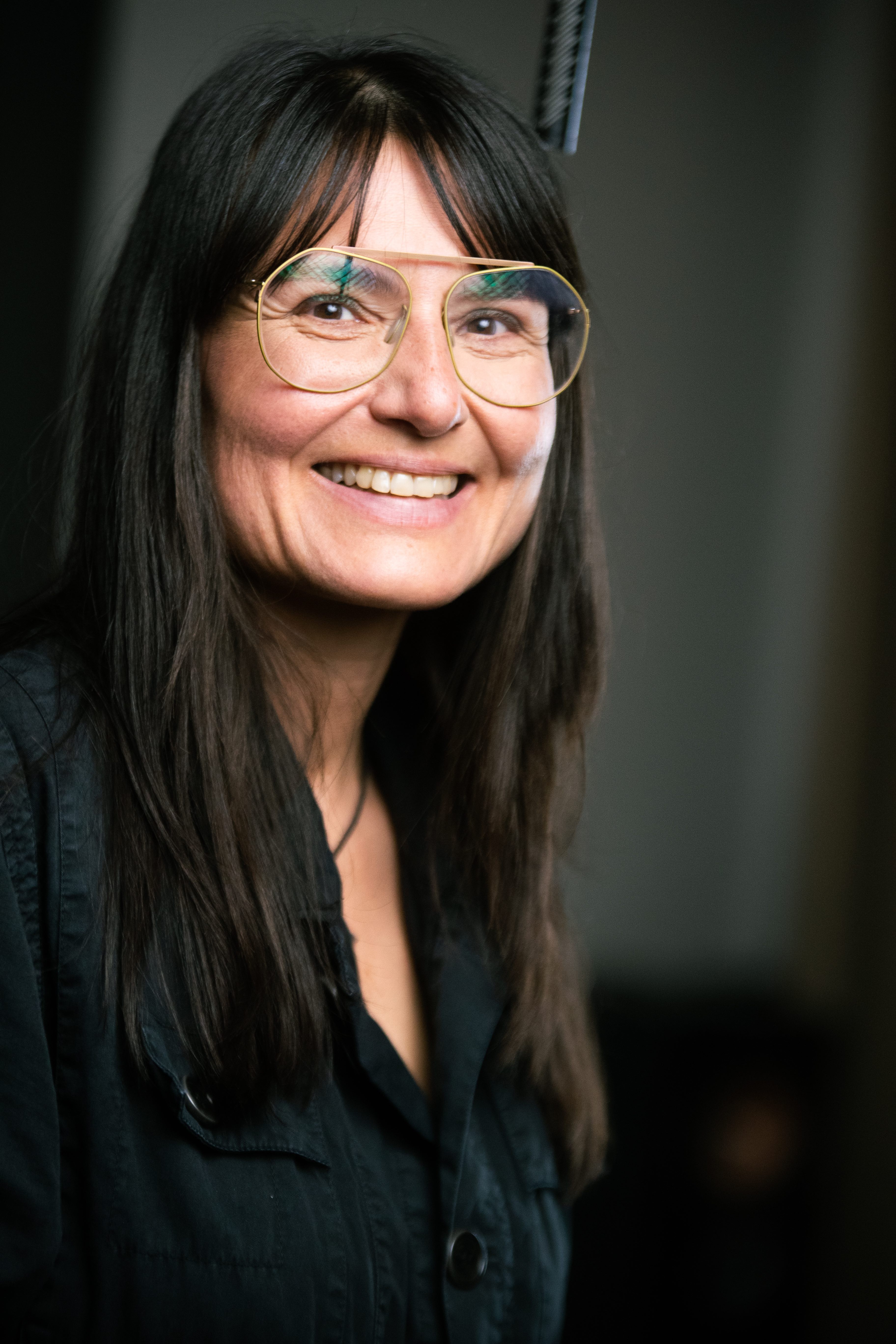
Pioneering data economist & future synthesist, Dr. Sabine Seymour coined "Fashionable Technology" and leads MOONDIAL & PONY EARTH, driving regenerative finance, digital health, and biodiversity. Featured in Wired, Forbes & NYT.
Dr. Sabine Seymour is a pioneering data economist, future synthesist, and globally recognized authority at the intersection of token economy, regenerative finance (ReFi), biometric and environmental data, wearable technology, digital health, and biodiversity. With a career spanning from the mid-1990s, she has established herself as an award-winning entrepreneur, professor, board member, and investor across the USA and Europe, serving as a domain expert for world-class organizations including Disney, Intel, Siemens, Lufthansa, DuPont, and NASA. She coined the term "Fashionable Technology" and became its inaugural professor at the prestigious Parsons School of Design in New York, a discipline she introduced to the world through her bestselling book of the same name. Her think tank MOONDIAL explores the convergence of sensors, data, and the human body to advance digital health and green tech solutions for a regenerative lifestyle, while SUPA is tokenizing the body to democratize healthcare. She recently co-founded PONY EARTH, a venture dedicated to financing the recovery of agricultural biodiversity worldwide to build resilient food systems and combat climate change. A sought-after synthesist and interdisciplinary thinker, Dr. Seymour assembles eclectic teams of scientists, artists, technologists, and economists to develop digital products and distributed finance models that drive financial, social, and environmental sustainability. She is an expert reviewer for the European Commission, a startup mentor for programs including Techstars and NewInc, and a faculty member at Singularity University Portugal. She has presented her research at MIT, Aalto, SXSW, TEDx, and Ars Electronica, and advises environmental initiatives such as Waves of Change and startups like food allergy company Alerje. Described as a visionary, holistic thinker, and interdisciplinary rebel, Dr. Seymour has been featured in Wired, Vogue, Forbes, The Wall Street Journal, and The New York Times, and has appeared on PBS, NBC, and ORF, with her life's work honored at the Museum of Applied Arts in Vienna.
Sessions
Lifestyle data - digital real world evidence for the future of personalized healthcare.
The economics of data sovereignty: Democratizing data. IoT & Data driven business models
What are the synergies between agricultural biodiversity and a regenerative economy?
The wisdom of data and the power of storytelling to simplify complex science
Punk Resilience: The Stubborn Art of Refusing Your Limits
Reimagining Ownership: New Models for Equitable, AI-Driven Innovation
Biometric and environmental data. The foundation for wisdom for a regenerative lifestyle.