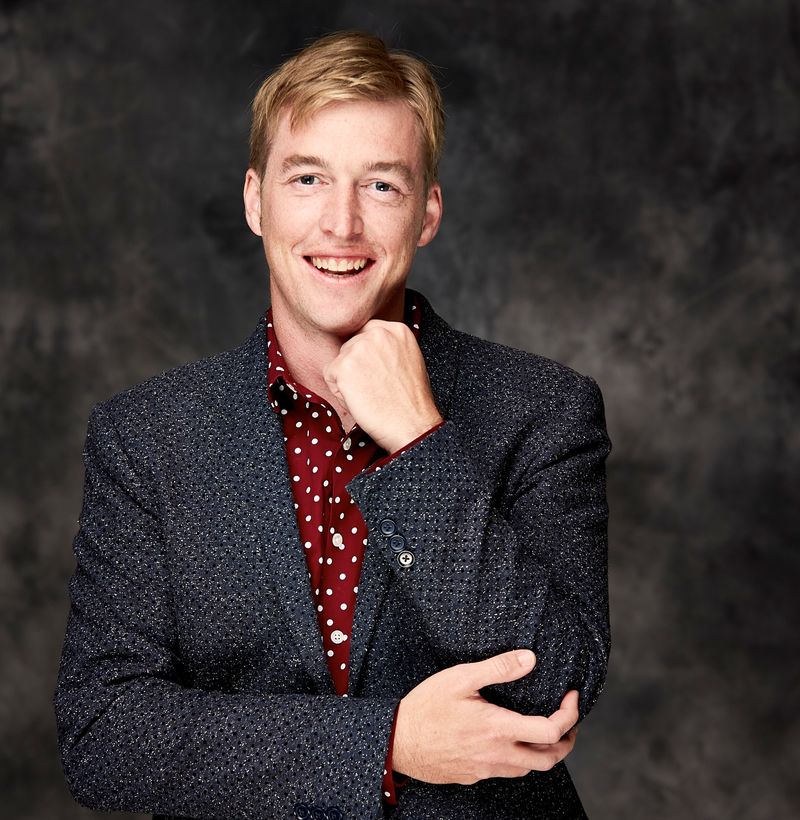
Aerospace engineer & founder of Free Flight Research Lab. Ex-Airbus, NASA PI, CTO of Outpost Technologies. Pioneering robotic paragliders & atmospheric sensing for climate science, wildfire research & flight safety.
Michael Vergalla is an aerospace engineer, rapid prototyper, and propulsion development expert working at the intersection of experimental flight, climate-tech sensing, and machine learning. He is the founder of Free Flight Research Lab, a nonprofit developing robotic paragliders and high-altitude glidersondes — known as "sensor flocks" — to expand routine atmospheric measurements for climate science, conservation, and flight safety. Previously, he co-founded Outpost Technologies as CTO, served as a Principal Investigator on NASA contracts, and led his team to build and launch the company's first satellite in under eight months. At Airbus' Acubed Innovation Center, he created and led Project Monark, advancing distributed sensing and GNSS radio-occultation experiments on commercial aircraft to improve global weather forecasting and operational decision-making. He also served as a researcher with Frontier Development Lab — in partnership with NASA, Google, and NVIDIA — where he developed global ionospheric Total Electron Content forecasting models using a Spherical Fourier Neural Operator. Most recently, Michael has been pioneering repeatable, contamination-aware upper-atmosphere sampling workflows, transforming one-off extreme-environment flights into scalable discovery platforms for wildfire science, biology, chemistry, and climate research.