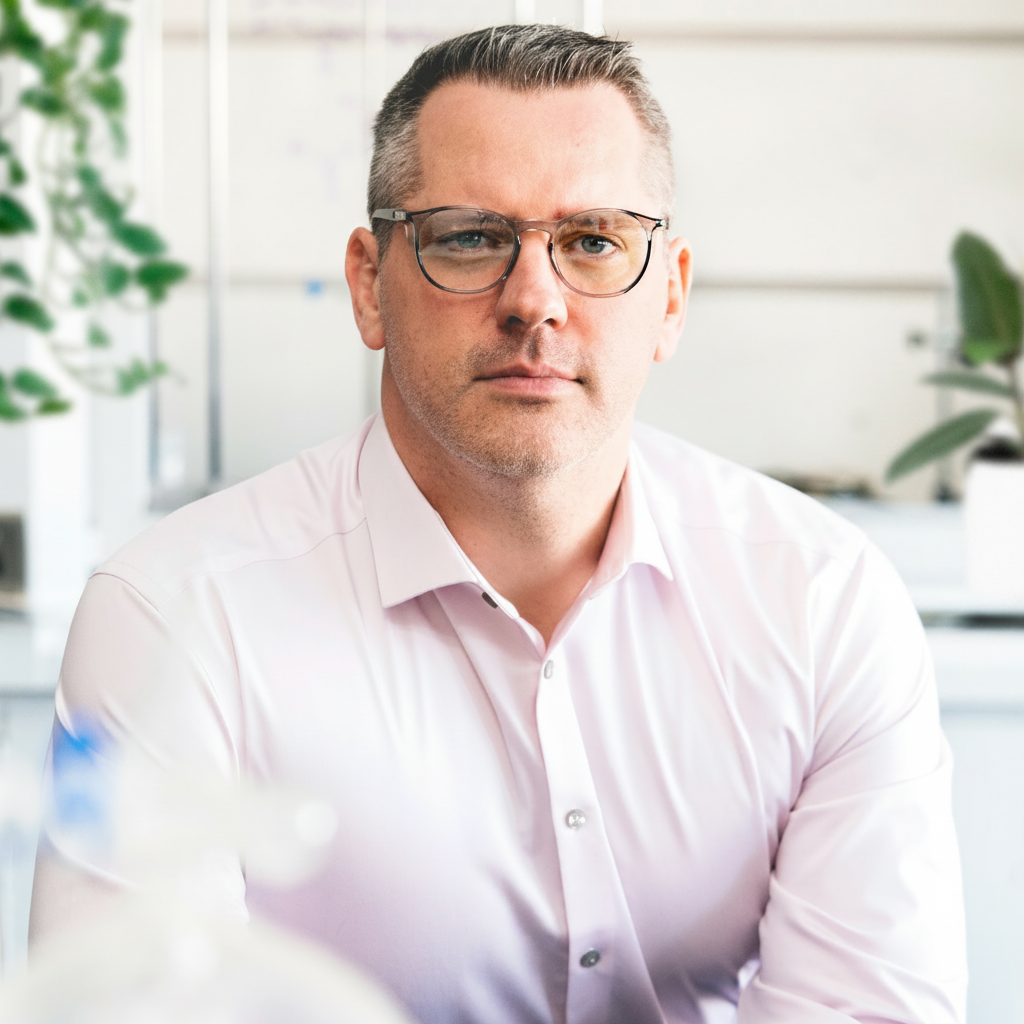
NFW Founder & CEO Luke Haverhals, PhD, pioneers circular, low-carbon materials science. Named IPOEF Inventor of the Year & WEF Tech Pioneer, he's reshaping fashion & footwear with renewable, high-performance materials.
Luke Haverhals, PhD, is the Founder and CEO of Natural Fiber Welding (NFW), a pioneering materials science company dedicated to building a fully circular, low-carbon, and holistically sustainable material economy. Holding a doctorate in Chemistry from the University of Iowa, Luke began his career as an Assistant Research Professor at the US Naval Academy, where he explored all-natural alternatives to petroleum-derived synthetic plastics — research that laid the groundwork for NFW's ecosystem of patented, paradigm-shifting material technologies. His vision for bioneutral, high-performance materials derived from renewable natural inputs has positioned NFW as a leader in sustainable materials innovation, with applications spanning fashion, footwear, and other major consumer industries. A sought-after thought leader, Luke has delivered dozens of invited international presentations at the intersection of materials science and trillion-dollar consumer markets. In 2022, he was named IPOEF Inventor of the Year, and he has earned recognition as a Fortune+Salesforce Ecopreneur, Unreasonable Group Fellow, Business Insider Climate Action 30 honoree, Forbes Council Member, and World Economic Forum Technology Pioneer. He is also a graduate of The Circulars Accelerator, Fashion for Good Scaling Programme, and the National Science Foundation I-Corps Program. Through NFW, Luke is driving a moonshot, systems-level shift away from toxic chemistries and fossil fuel-derived materials, empowering material scientists, engineers, manufacturers, investors, and global brands to reimagine the future of sustainable materials from the ground up.
Sessions
Comprehensively sustainable circular materials
The implications and opportunities in replacing fashion's dependency on plastic fibers