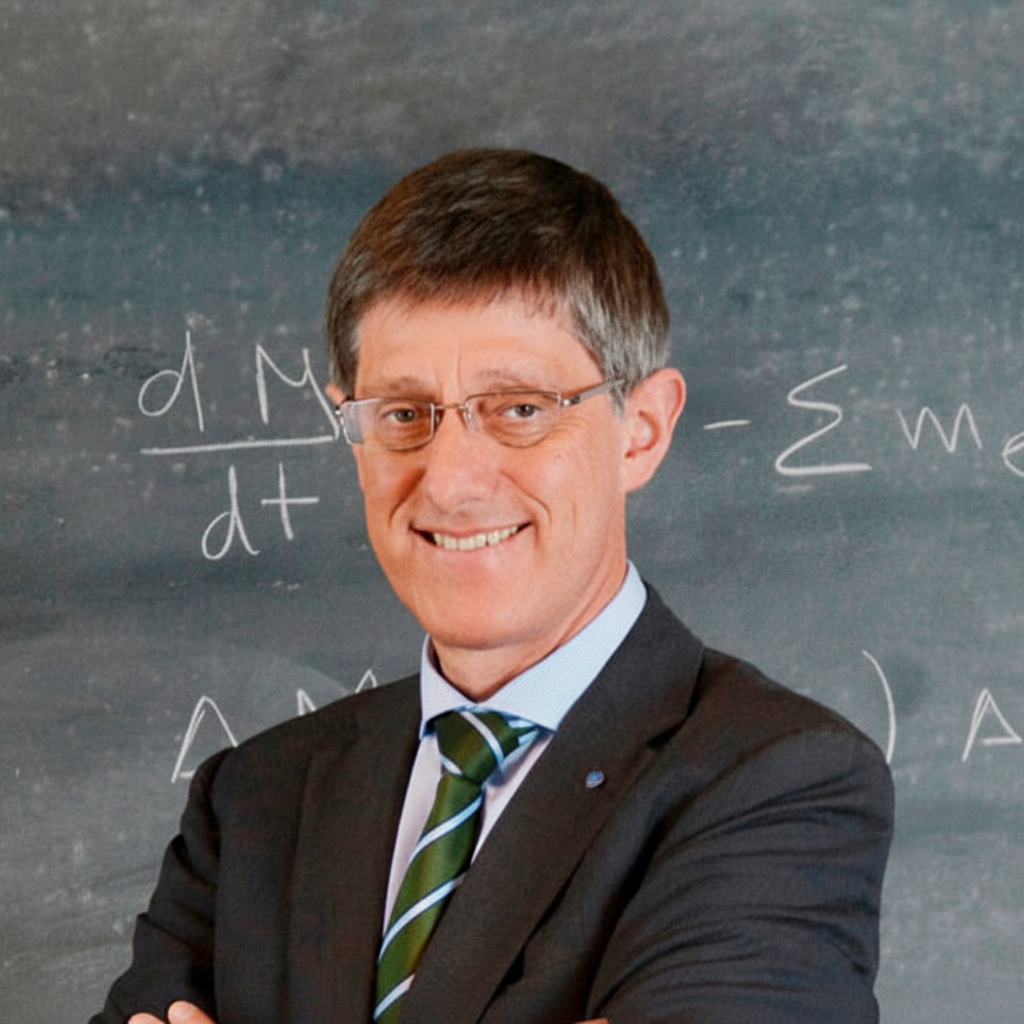
Distinguished Professor at IST & Singularity University AI expert. PhD from UC Berkeley, author of 3 books, past president of IST. Decades of AI/ML experience helping businesses navigate AI's transformative impact.
Arlindo Oliveira is a Distinguished Professor at the Department of Computer Science and Engineering of Instituto Superior Técnico (IST), University of Lisbon, Portugal, and a recognized Singularity University expert in Artificial Intelligence and Machine Learning. With a BSc and MSc in Electrical Engineering and Computer Science from IST and a PhD from the University of California, Berkeley, he brings world-class academic credentials to his work at the forefront of AI research. Arlindo is the author of three books and hundreds of peer-reviewed articles spanning algorithms, machine learning, bioinformatics, and computer architecture, and has conducted research at prestigious institutions including CERN, the Electronics Research Labs of UC Berkeley, Cadence Labs, and INESC-ID. A member of the Portuguese Academy of Engineering and a Senior Member of IEEE, he has also served as past president of IST, INESC-ID, and the Portuguese Association for Artificial Intelligence. With decades of hands-on experience in artificial intelligence, machine learning, and their real-world applications, Arlindo Oliveira is uniquely positioned to help businesses and individuals understand the transformative potential of AI and navigate its impact on their industries and daily lives.
Sessions
Artificial Intelligence and Digital Minds: Technologies and Applications
Recent advances in the fields of Artificial Intelligence (AI) and Machine Learning are revolutionizing our economy and our society. AI-based systems are finding numerous applications in marketing, sales, healthcare, finances, education, transportation, logistics and even in scientific research. In the near future, AI-based systems may replace a significant fraction of human workers in many jobs and functions. Machine Learning, a technology that is at the core of recent AI developments, enables computers to learn from experience and opens the way to even more radical changes in the way we interact with machines. In the distant future, AI research may even open the door to Artificial General Intelligence (AGI), enabling us to create digital minds, systems as intelligent and powerful as the human brain, either by direct emulation or by some other approach. If they come into existence, what will be the social, legal, and ethical implications?